Telephone 0791 7770888
Expert energy Performance certification and surveys
For existing dwellings up for Sale and Rent
Telephone 0791 7770888
Expert energy Performance certification and surveys
For existing dwellings up for Sale and Rent
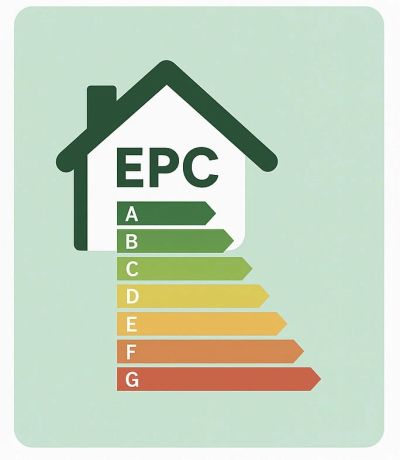
An Energy Performance Certificate (EPC) shows how energy-efficient your home is and gives an estimate of the cost of heating and lighting it, along with the amount of CO₂ it produces. As well as rating your property, the EPC highlights practical steps you can take to improve efficiency, helping you reduce both your energy bills and environmental impact.
Homes are graded on a scale from A (most efficient) to G (least efficient), along with a numerical score. The higher the score, the more energy-efficient the property, typically meaning lower running costs and reduced carbon emissions. Each certificate also includes an Environmental Impact Rating, estimating how much CO₂ your home produces each year.
An EPC is a legal requirement if you are selling or renting a property. It is also required for newly built homes. Beyond compliance, an EPC is a useful starting point if you want to improve your home’s energy efficiency and lower your energy costs.
1. Current Performance
The first section assesses how your home performs by examining key elements such as walls, floors, insulation, heating systems and lighting. Each feature is rated for its energy efficiency - for example, a well-insulated roof may achieve a “very good” rating.
Note: The EPC evaluates efficiency, not the condition or functionality of these elements.
2. Recommended Improvements
The second section outlines ways to improve your property’s energy performance. For each recommendation, you’ll see:
For instance, installing floor insulation in a typical three-bedroom home could cost £4,000–£6,000, save around £45 per year on heating, and improve the EPC rating.
The report also estimates how much CO₂ emissions could be reduced if all recommendations are implemented. These figures are based on average usage and may vary depending on individual household habits.
f you’re renting out a property, it must have a minimum EPC rating of E or above. Properties rated F or G cannot legally be let, unless a valid exemption applies.
These rules were introduced under the Minimum Energy Efficiency Standards (MEES) in 2018. Exemptions may be granted in certain cases but typically last for five years and are enforced by local authorities.
Most homes in the UK currently fall between EPC bands D and E. The government aims for as many properties as possible to reach band C or above by 2035.
Improving energy efficiency plays a key role in achieving the UK’s target of net-zero carbon emissions by 2050. It also helps homeowners reduce energy costs and create more comfortable living spaces.
You can check if your property already has an EPC via the official government register. If your certificate is missing, outdated, or your property has been improved, you’ll need to arrange a new assessment. EPCs must be carried out by an accredited domestic energy assessor.

What the Assessor Looks For
Although Energy Performance Certificates (EPCs) have been around for more than a decade, there is still some confusion about what actually takes place during an EPC survey. What does the assessor do when they arrive at your property, and what does the process involve?
This overview explains what the surveyor measures and what evidence they gather - not in enough detail to carry out the process yourself, but enough to help you understand exactly what to expect during the visit.
Loft Insulation
If your loft is accessible, the assessor will carry out a head-and-shoulders inspection to check the insulation. They will measure its depth, take photographs, and note the type of party wall between your home and any neighbouring property. Loft access is essential for an accurate rating - the assessor can only record what they can see and verify with evidence.
Wall Type, Thickness and Insulation
The type of walls you have significantly affects your home’s energy efficiency. Solid and cavity walls differ in their insulating performance, which directly impacts your EPC score. The assessor will measure the wall thickness, confirm the construction type, and check for any visible insulation, taking photographic evidence along the way.
Heating System Identification
If your property has electric heating, the assessor will note the type of heaters and which rooms are heated. For boilers or heat pumps, they will record the exact make and model to ensure an accurate efficiency rating. They will also identify and photograph any heating controls, such as thermostats, programmers or thermostatic radiator valves (TRVs).
Hot Water System
If you have a combination (combi) boiler, your hot water system will be recorded as part of the main heating setup. For homes with a separate hot water cylinder, the assessor will check its capacity, insulation and location, taking photographs for their records.
Windows
The survey includes an inspection of your windows to determine their type (single, double or triple glazed) and approximate age. For double-glazed units, the gap width between panes will be measured; for single glazing, the assessor will check for any draught-proofing features.
Lighting
The number of light fittings and the proportion that use energy-efficient bulbs (such as LEDs or CFLs) will be recorded, as this contributes to the overall energy rating.
Bathrooms and Rooms Count
The assessor will count the number of ‘habitable rooms’ in your property - generally excluding utility areas and small kitchens - as well as the number of bathrooms, showers and baths.
Renewable Energy Systems
If your home features renewable energy technologies, such as solar panels, solar thermal systems or wind turbines, these will be documented. The size and output capacity of these systems are key factors in the calculation.
Floor Plan Creation
After collecting all the required data, the assessor will create a simple floor plan of your property. This helps determine the total floor area and calculate heat loss through walls and partitions. These sketches are for EPC calculation purposes only and are not the same as estate agent floor plans. Producing professional floor plans is possible at an additional cost, as it falls outside the standard EPC assessment.
Photographic Evidence
Throughout the survey, the assessor will take multiple photographs to verify the information entered into the EPC software. This evidence is required for audit purposes by the accreditation body to ensure that all recorded details can be justified.
Documentary Evidence
If your home contains insulation or other energy-efficient upgrades that are not visible, such as cavity wall, roof or floor insulation, the assessor will need supporting documentation to include these in the EPC. Without this evidence, such improvements cannot be credited in the final report.
Producing the EPC
Once the site visit is complete, the assessor will input all the measurements, photographs and documentation into the EPC software to generate your certificate. This is typically completed within 48 hours of the survey.
If you have questions about the EPC process or would like to know more about what your survey will involve, don’t hesitate to ask us. Every home is unique, but the steps above cover the core elements included in nearly all domestic EPC assessments.

Daren lives in Wokingham , Berkshire and is married with 3 grown up children. After 35 years in the IT and Telecoms industry, he decided to retrain as a Domestic Energy Assessor and join the drive for more energy efficient homes


Including - Wokingham , Reading, Bracknell, Maidenhead, Windsor, Newbury, Ascot & Slough
Including - Camberley, Guildford, Woking, Farnham, Epsom, Leatherhead & Staines
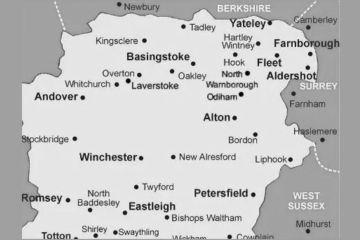
Including - Farnborough, Basingstoke, Aldershot, Fleet, Hook, Andover & Winchester
Thank you for looking